
Raising Ducks For Egg Production
Perhaps you have heard about how fantastic duck eggs are when baking. Are you allergic to chicken eggs? Some people report tolerating duck eggs as an alternative. Regardless of your reason for considering raising ducks for eggs, we want you to be successful and grow your ducks to their peak health and laying ability.
Ducks and chickens are a bit similar in terms of raising. However, there are some critical differences between the two species. You will not need to provide a roost for ducks, and they will be happier with an open water source. Even if the water container is just a black rubber feed pan that’s water is changed out frequently or even a shallow plastic children’s pool, ducks love water.
Ducks are hardier and have fewer diseases that affect them. They are a great alternative to raise for your household egg supply. Chickens generally return to their nesting boxes to lay their daily eggs, whereas ducks can be notorious for hiding their eggs among tall grasses and under shrubs.

Feed Needs
Ducks have slightly different nutritional needs than chickens. While they can consume the same feed as chickens, they require a higher level of niacin, also called vitamin B3. A niacin deficiency can result in bowed legs and swollen hock joints and may reduce mobility. Ducks will also benefit from access to oyster shells for added calcium, resulting in stronger eggshells.
If your ducks are raised fully in a coop, they will be thankful for grasses and supplemental insects. They enjoy digging through clumps of vegetation. Green grasses and weeds provide carotenoids, which create the rich dark yellow/orange yolk due to a pigment called xanthophylls.

Care
Ducks are omnivores. They enjoy a diet of insects, seeds, vegetables, grains, and grasses. They are excellent foragers when able to free-range. They need protection from predators, especially at night. They need shelter during bad weather, although they enjoy running around in a rainstorm. They are known to quack in excitement when the rain starts to come down.
Adding an auxiliary light in the winter will help to increase the number of eggs they lay each year. If you do use supplemental lighting, use a timer to keep a regular lighting schedule to reduce stress on your ducks.
Ducks do not keep their eggs as clean as chickens. Providing nests full of straw can assist in having clean eggs and regular egg collection.

Best Breeds for Egg Production
Khaki Campbell lay throughout the year averaging 165 to 210 eggs per year, superseding other purebred breeds. Their egg size is comparable to a large chicken egg, therefore easily used as a substitute for chicken eggs.
Golden Layer is a hybrid that averages 200 to 290 eggs per year. Their egg is about 1 ½ times the size of a large chicken egg. They are excellent for use in baking.
The White Layer hybrid lays an average of 290 eggs annually. This hybrid is similar to the Golden Layer in terms of egg size and production. With white feathering, this duck is preferred over colored duck breeds if you want a dual-purpose duck for both meat and eggs. The carcass of white ducks will be cleaner looking with fewer noticeable pin feathers.
Related Posts You Might Like

Dabbling and Diving Ducks – What’s The Difference?
Learn the differences between diving and dabbling ducks. Whether you’re a duck enthusiast or a curious observer, you’re sure to learn something!
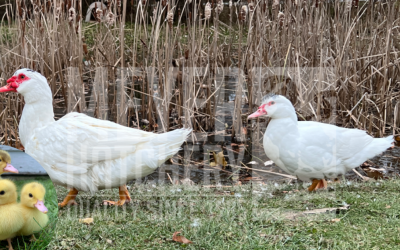
Breed Spotlight: Muscovy
A dual-purpose homesteader’s favorite: the Muscovy. These unique waterfowl make practical and endearing additions to your flock – learn more!

Breed Spotlight: Jumbo Pekin
Check out our breed spotlight on Jumbo Pekin Ducks – the ‘broilers of the duck world’ with remarkable size and outstanding meat production. Learn about rapid growth rates, unique breeding, and why they’re the sought-after meat ducks. Whether for homesteading or breeding, Jumbo Pekins make a practical and sizable addition. Click to learn more about Jumbo Pekin!
Very good article. We got our ducks for pets and love them. We want to enhance their lives as much as possible.
Thank you for taking the time to read our blog, Cathy! I hope your ducks live a happy life with you! They make great pets!